


Vizo Lite X
tuyenThucPa
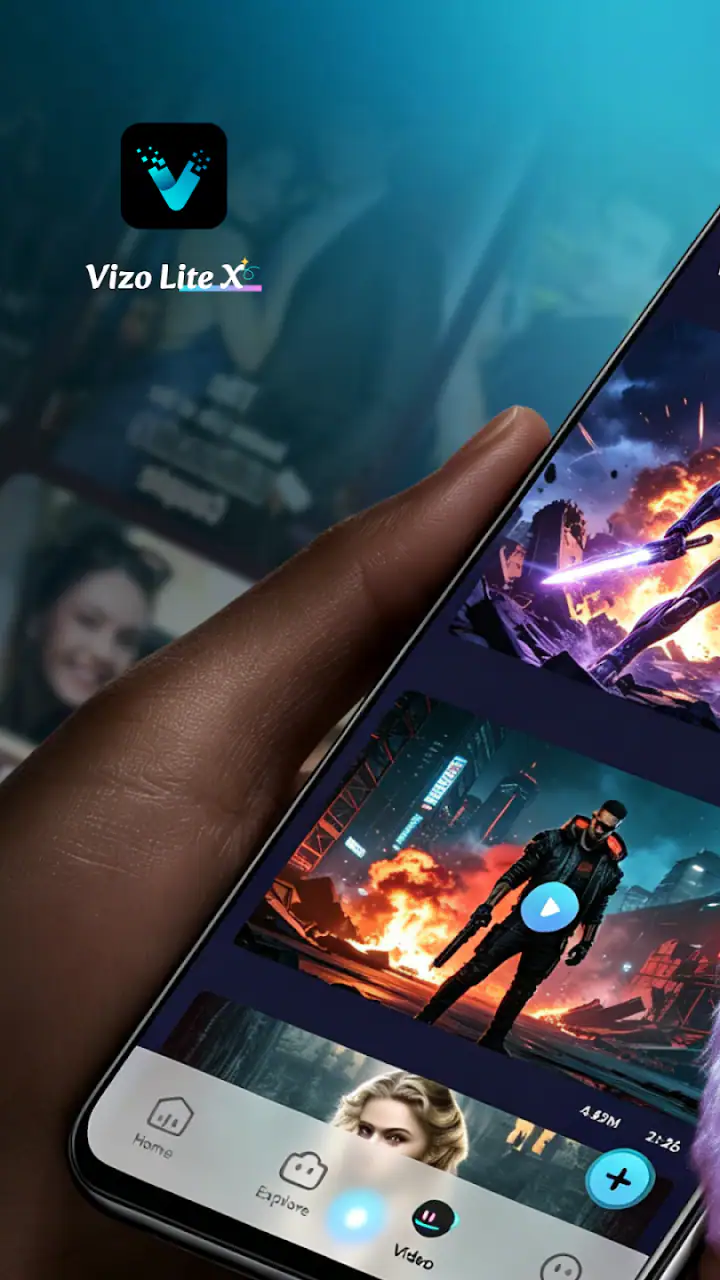
When I want to turn a short phone video into something cleaner without opening a complicated editing suite, I look for a tool that gets out of the way quickly. Vizo Lite X is aimed at exactly that kind of use. It is a free personalization app from tuyenThucPa, presented as a simple, lightweight video editor rather than a full production studio. After spending time with it, my overall impression is straightforward: it makes the most sense for quick edits, casual sharing, and users who would rather learn a small set of clear actions than sort through a crowded professional interface.
The important word here is “lite.” I would not choose it expecting the depth of a desktop editor or the large template libraries found in some popular social-video apps. I would choose it when the job is practical: shorten a clip, make a basic adjustment, prepare a video for a message, or create a modest personal post. That focused approach is also its main appeal. There is less pressure to understand an entire editing ecosystem before making a useful result.
What to expect before you start editing
Vizo Lite X belongs to the personalization side of the app world, but its everyday role is clearly video editing. The store summary describes it as simple and lightweight, and that description sets a fair expectation. You are getting an accessible editing companion, not a feature-heavy media workstation. The app is free, carries an Everyone age rating, and is available for devices running Android 8.1 or later. That makes it approachable for people using older compatible phones as well as newer devices.
The app has built a visible audience, with a 4.7 average from around five thousand ratings and over one hundred thousand installs. I see that as a sign that its uncomplicated direction is connecting with people, although popularity alone does not tell me whether it suits every editing style. Someone who only needs a quick result may appreciate the restraint. Someone who wants layered sound design, detailed color work, or a large collection of animated effects should be more cautious.
My first useful distinction is between quick personal video editing and serious content production. Vizo Lite X fits the first category. It is a good candidate for a family clip, a small travel montage, a before-and-after recording, or a short video that needs tidying before you send it. It is less convincing as the only tool for a creator who publishes frequently and needs repeatable, highly controlled workflows.
Related News

Why WhatsApp Messenger Still Makes Everyday Communication Feel Easy

Jurassic World: The Game Is the Better Dino Tycoon for Strategic Players

Threads in Real Life: Who Should Join, Lurk, or Leave

How SHEIN Turned Shopping Into an Endless Content Feed

How to Make Fortnite Feel Smarter on Mobile

Should You Switch to Microsoft Outlook on Mobile?
That difference affects how you judge the app. A compact editor can feel limited if you compare it with a full-featured alternative, but pleasantly efficient if you compare it with doing nothing because a larger app feels intimidating. I found the strongest value in reducing friction between “I have a video” and “I can share a presentable version.”
Who will feel at home with it
I would recommend trying it first if you are new to editing, if you usually record clips for friends and family, or if your phone is not ideal for demanding applications. The lightweight positioning is especially relevant when you want an editor that does not make the whole process feel like a project. It can also suit a user who prefers learning by doing: open a clip, make one change, review it, and decide whether the result is ready.
There is a useful psychological advantage here. When an editor presents too many controls at once, beginners often spend more time searching than creating. A smaller tool can encourage a better habit: make the one change that solves the problem, preview it, and stop when the video is good enough. For casual footage, that is often more valuable than having dozens of options that never get used.
Gallery
I would skip it as my main editor if my normal work involved carefully synchronized music, multiple visual layers, advanced transitions, detailed color correction, or a polished publishing pipeline. In those situations, a more established full editor is likely the better investment of time. The trade-off is simple: Vizo Lite X aims to make basic editing less demanding, while larger alternatives offer more control at the cost of a steeper learning curve and a heavier experience.
Getting through the first setup without overthinking it
For a first-time user, I suggest beginning with one ordinary clip rather than a large collection. Choose a video where the needed improvement is obvious, such as a recording with an awkward beginning or too much empty footage at the end. This gives you a clear target and makes it easier to tell whether the app is helping. Starting with a single clip also prevents the first session from becoming an organizing task instead of an editing task.
Once the video is open, take a moment to identify the basic rhythm of the workspace. I recommend looking for the original preview, the editing controls, and the point where the finished version is saved or exported. Beginners often tap every visible option immediately, but that is not the fastest route. First understand where the source video is shown and how you return to the result. Then make one small change.
A practical setup habit is to keep the original clip untouched. If you are working with a family recording or an important memory, treat the first edit as a copy-based experiment rather than a replacement. This is good practice with any mobile editor, but it matters even more when you are still learning where its save actions lead. Keeping the source gives you room to try again without worrying that a rough first attempt has become permanent.
Another helpful habit is to decide the destination before editing. A clip intended for a private message may need only trimming. A clip meant for a social post may benefit from a tighter opening so the viewer reaches the useful moment sooner. A video saved for personal storage may not need the same treatment at all. Thinking about the viewer first keeps you from making random changes simply because the controls are available.
The current version is 1.31, and the app is free to use. Those details make it easy to try without turning the first session into a purchase decision. I still recommend checking the result carefully before deleting the source, especially if the video matters. A lightweight editor can simplify the process, but your own review of the final file remains the best safeguard.
The fastest route to a meaningful first result
My preferred first exercise is a simple opening-and-ending cleanup. Select a clip, remove the moment before the action begins, remove the pause after it ends, and preview the shortened result from start to finish. This is a small change, but it often produces the biggest improvement in a casual video. Viewers usually notice hesitation and dead space more than they notice the absence of elaborate effects.
Use the preview as a decision tool rather than trusting the editing position alone. Watch the first second or two and the final moment. If the opening feels abrupt, restore a little breathing room. If the ending stops while someone is still speaking or moving, give it a little more space. The goal is not to make the clip as short as possible; it is to make the beginning and ending feel intentional.
This workflow is useful for a realistic everyday situation. Imagine recording a child blowing out candles at a birthday gathering. The phone may begin recording while you are finding the right angle and continue after everyone reacts. A quick edit can remove those unhelpful moments while preserving the actual celebration. Vizo Lite X is well suited to that kind of small but meaningful improvement because the task has a clear finish line.
After the first preview, I would make only one additional adjustment if the video genuinely needs it. For example, if the main subject is difficult to see, focus on improving that particular presentation rather than adding several decorative changes. The best first success is a video that feels clearer, not a video that proves you found every control.
Before saving, watch the entire clip once. Short videos can hide mistakes because the editing session feels quick. Check that the action starts where you expect, that no important words were removed, and that the ending does not feel accidentally cut. If the app offers a separate save or export action, use it deliberately and then open the finished file from your device to confirm that it plays as intended.
Where beginners may become confused
The most common confusion with a compact editor is assuming that every visible control will produce a dramatic change. In practice, the best edits are often subtle. A cleaner start, a more natural finish, and a focused adjustment can matter more than a collection of effects. If your first result looks almost the same as the original but feels easier to watch, that is not a failure. It may be exactly the right outcome.
Another point of friction is the difference between changing a preview and creating a finished file. Editing an on-screen version is not always the same as saving a shareable result. I advise treating the final save as its own step: preview, make sure the edit is correct, save or export, and then locate the resulting video. This extra check prevents the familiar problem of assuming a change was stored when it was only visible inside the editing session.
File selection can also slow down a first attempt. Phones often contain screen recordings, downloaded clips, camera videos, and duplicates with similar names. Rather than opening several files at random, choose a clip whose content you recognize immediately. A short, well-lit recording with a clear subject makes it easier to judge the editor than a long, shaky video with several problems at once.
There is also a quality trade-off worth keeping in mind. Any time a video is processed and saved again, the new file may not behave exactly like the original in terms of size, appearance, or compatibility. I would not make repeated passes through the editor unless there is a reason. Plan the basic change, preview it, and save one clean version. This reduces confusion and avoids building a chain of slightly different copies.
Users sometimes ask whether a lightweight editor is appropriate for older Android phones. Since Vizo Lite X supports Android 8.1 and later, it is available to a broad range of compatible devices. That does not guarantee identical performance on every phone, so I would begin with a short clip and observe how comfortable the preview and saving process feels. If your device struggles with large videos, working in smaller pieces is a sensible way to keep the session manageable.
How it compares with familiar alternatives
Compared with a full mobile video editor, Vizo Lite X is easier to approach but gives up depth. Larger editors are often better when you need a timeline with several layers, detailed audio placement, sophisticated text treatment, or a repeatable style for frequent publishing. They can also provide more guidance through templates and tutorials. The cost is that their interfaces may feel busy, and some users end up spending more time learning the app than improving a simple clip.
Compared with social-first editors, Vizo Lite X appears more practical than trend-driven. A social platform editor may be the better choice when you want ready-made formats, music-led templates, or effects designed around current posting habits. On the other hand, those tools can encourage you to edit toward the platform instead of toward the actual memory or message in your video. For a private clip or a straightforward cleanup, a lighter approach can feel more appropriate.
Compared with the basic editor already included on a phone, the reason to try Vizo Lite X is convenience and focus. If your built-in tools already handle the exact adjustment you need, switching apps may not be worthwhile. If the default editor feels awkward or you want a separate place for quick video work, this app becomes more interesting. I would make that decision based on the first task, not on the number of controls listed in either app.
This is also where the developer matters in a practical sense. tuyenThucPa has positioned this release around a narrow, approachable purpose rather than trying to turn it into an all-in-one creative suite. That focus can be a strength for a first-time user, but it means experienced editors should compare their required workflow honestly before moving important projects into it.
Useful habits for better results after the first edit
Once the basic workflow feels comfortable, I would use a “one problem per pass” rule. If a clip is too long, fix the length first. If the subject is hard to follow, address that next. If the result still needs work, make another deliberate decision. This approach makes it much easier to understand what improved the video and what did not. It also prevents the common beginner mistake of changing several things and then being unable to explain why the result feels worse.
For clips meant to be watched without context, make the first moment do useful work. Start close to the action or the reason you recorded the video. This does not mean cutting aggressively; it means removing the part where the camera is still being positioned. In a message to a friend, that small improvement can make the recipient more likely to watch the whole clip.
For personal memories, be more conservative. A pause, a laugh, or a little background movement may feel unnecessary during editing but meaningful later. I would create a concise sharing copy while keeping the original recording separately. That gives you the convenience of a shorter version without treating the edited file as the only record of the moment.
When comparing versions, do not judge only from the editing screen. Watch the saved result in the same kind of situation where it will be used: on the phone, in a message preview, or with sound at a normal listening level. A change that looks good while editing may feel too quick when watched normally. This is one of the most useful lessons for beginners because the finished audience experiences the file, not the editor.
I also recommend naming or organizing finished clips in a way you will understand later. A short video can become difficult to identify when several versions sit beside the original. Keeping one source and one clearly recognizable edited copy is usually better than saving many nearly identical attempts. This is a workflow improvement rather than an app feature, but it makes a lightweight editor much more useful over time.
When a different app is the wiser choice
Vizo Lite X is not the right choice simply because it is free or because it has a strong average rating. I would move to a more advanced editor when a project depends on precise timing, multiple sources playing together, extensive sound work, or a consistent visual identity across many videos. In those cases, extra controls are not decoration; they are part of the job.
I would also look elsewhere if my main goal were creating highly stylized short-form content from templates. A social-focused alternative may provide a faster route to that particular style. Likewise, if I needed detailed control over every visual element, a larger editor would justify its additional complexity. Choosing the smaller app only to discover its limits halfway through an important project would be frustrating.
For everyone else, the limitations are easier to accept because they match the intended role. A person who wants to make a family clip less awkward, prepare a short travel memory, or clean up a recording before sending it may not benefit from a professional timeline. In that setting, the lighter workflow can be the more sensible choice.
My recommendation for a first-time user
I would begin with one short, unimportant video and give myself a single goal: make the start and finish feel cleaner. That first exercise answers the questions that matter most. Can I find my clips comfortably? Do the controls make sense? Can I preview the change? Can I save a result I can locate afterward? If the answer is yes, the app has already earned a place in a casual editing toolkit.
My overall view of Vizo Lite X is positive, with a clear boundary around that recommendation. It is appealing because it does not ask a beginner to become an editor before making a useful video. The free price, Everyone rating, broad Android compatibility, and focused design make it easy to approach. Its current release, version 1.31, is best understood as a practical tool for modest edits rather than a replacement for a complete creative workstation.
The strongest reason to try it is not the promise of elaborate production. It is the chance to finish small video tasks that otherwise remain unfinished because other apps feel excessive. If your needs are simple, start with a recognizable clip, preserve the original, make one purposeful change, preview the whole result, and confirm the saved file. That path gives you a reassuring first success and a realistic sense of where the app fits.
In my experience, that is the right way to approach this editor: expect clarity, not endless options. Use it when speed and ease matter more than deep control, and choose a larger alternative when your project demands precision. For everyday personal videos, this is a sensible lightweight starting point rather than an ambitious all-purpose studio.
FAQs for Vizo Lite X
What is Vizo Lite X, and what can I use it for?
Vizo Lite X is presented as a lightweight mobile application designed for users who want a simple way to access its main entertainment or media-related features without installing a large, resource-heavy app. During testing, the most noticeable benefit was its straightforward interface and quick navigation. The exact tools available may depend on the current version, your device, and regional availability, so it is worth checking the app description before downloading.
Is Vizo Lite X free to download and use?
Vizo Lite X may be available to download at no initial cost, but users should carefully review the store listing for possible advertisements, optional purchases, subscriptions, or feature limitations. A free installation does not always mean that every function is completely free. Before confirming a payment, check the pricing details, renewal conditions, and cancellation instructions shown through Google Play or the App Store.
Does Vizo Lite X work on both Android and iPhone?
Compatibility depends on the official version published for each platform. Android users should verify the required Android version, storage space, and permissions on Google Play, while iPhone and iPad users should check the supported iOS or iPadOS version in the App Store. If the application is unavailable in your country or device store, avoid downloading unofficial files from unknown websites.
Does Vizo Lite X require an internet connection?
Most of the useful functions in Vizo Lite X are likely to depend on an active internet connection, particularly when the app loads online content, synchronizes information, or connects to an account. Some interface elements may still open offline, but that does not necessarily mean the main features will work. Performance can also vary noticeably between Wi-Fi and mobile data, especially on slower networks.
Is Vizo Lite X safe to install and what permissions does it request?
The safest option is to install Vizo Lite X only from its verified Google Play or App Store listing and confirm the developer name before proceeding. Review the requested permissions and consider whether they match the app’s purpose. Be cautious if an unofficial installer asks for excessive access, such as contacts, messages, or accessibility controls. Keep your operating system updated and read recent user reviews for security or privacy concerns.
Pros
- Simple interface makes core features easy to find.
- Lightweight design uses less storage than many full-featured apps.
- Loads quickly on devices with limited hardware.
- Useful option for users who prefer a minimal experience.
- Low visual clutter keeps navigation straightforward.
Cons
- Some advanced features may be missing compared with the full version.
- Compatibility and performance can vary across older devices.
- Limited customization may disappoint power users.
- The reduced feature set may require switching to another app.
- Updates may change the interface or affect device performance.


